
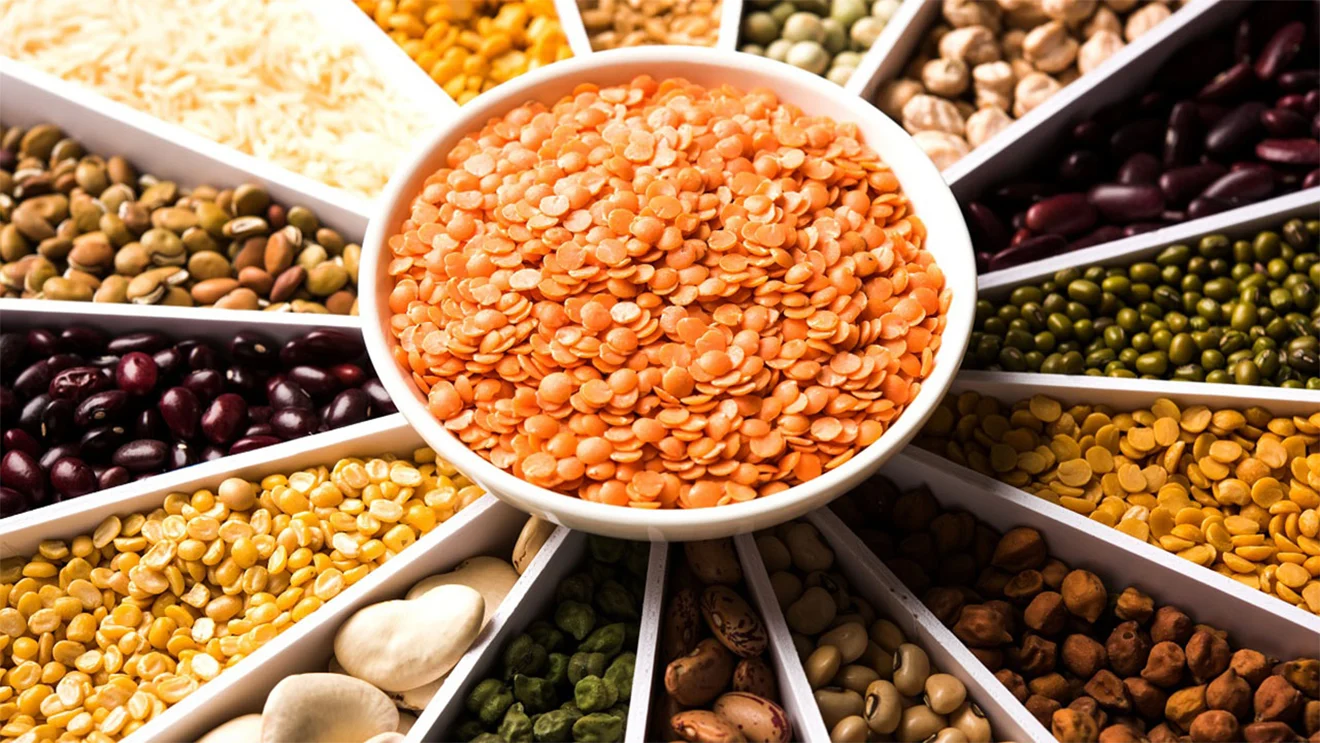
Pulses, commonly known as dals in Hindi, come in a wide variety, each offering unique nutritional benefits and a few limitations. Due to their rich nutritional profile, dals are a staple in diets across the Indian subcontinent. The most common and comforting combinations include rice with dal and chapati with dal.
Let’s explore some of the most popular types of dals:
Moong Dal
Moong dal is one of the most commonly used dals in Indian households. It is yellow in color after being split and skinned from its original green form. Both versions are edible, but the green (whole) moong contains more vitamins. It is easy to cook and digest, making it ideal for all age groups. Moong dal is rich in iron and potassium.
Arhar / Tur Dal
This beige-colored lentil with a yellow interior is also known as pigeon pea. It is one of the most popular dals in India. Tur dal is high in dietary fiber, which supports healthy digestion and helps regulate bowel movements.
Chana Dal
Also known as split Bengal gram, chana dal has a slightly nutty flavor. Its versatility makes it suitable for cooking with a variety of vegetables. It is rich in essential minerals like copper and manganese and can be beneficial for managing blood sugar levels.
Masoor Dal
Masoor dal, or red lentils, comes in two forms: whole (brown/black) and split (red/orange). It cooks quickly and does not require soaking due to its soft texture. A simple masoor dal prepared with butter and served with chapati makes for a delicious and nutritious meal.
Urad Dal
Urad dal is known for its high protein content and richness in Vitamin B. It is available in two forms: black (whole) and white (split and husked). The white version has a milder flavor, while the black variety is more robust. It is commonly used in dishes served with naan or for making dosa and idli batter.
Lobiya (Black-Eyed Peas)
Lobiya, also known as cowpea, is easily recognized by the black spot on its surface. It is rich in protein and zinc and is widely used in curries, fritters, and even papads.
Matar (Dried Peas)
Dried peas are commonly used in Indian street foods such as chaat and sev puri. They have a unique taste and texture that blends well with spices and other ingredients, making them a favorite in snacks.
Kidney Beans (Rajma)
Kidney beans are known for their kidney-like shape, earthy flavor, and smooth texture. They are most famously enjoyed as rajma chawal. It is important to soak them well and cook thoroughly (at least 30 minutes) to ensure safe consumption.
Chickpeas (Chana)
Chickpeas come in three main varieties:
- Brown (Desi chana)
- White (Kabuli chana or chhole)
- Green (Cholia)
They are typically boiled until soft and can be enjoyed as a healthy snack with onions, tomatoes, chilies, coriander, and lemon. Chickpeas are also widely used in dishes like chhole chawal.
Conclusion
Dals are not just a staple but a powerhouse of nutrition in Indian cuisine. Including a variety of pulses in your diet ensures a balanced intake of proteins, fiber, vitamins, and minerals, contributing to overall health and well-being.